
What Are the Differences Between 18650 Batteries and Other Battery Types?
What is the Lifespan of an 18650 Battery?
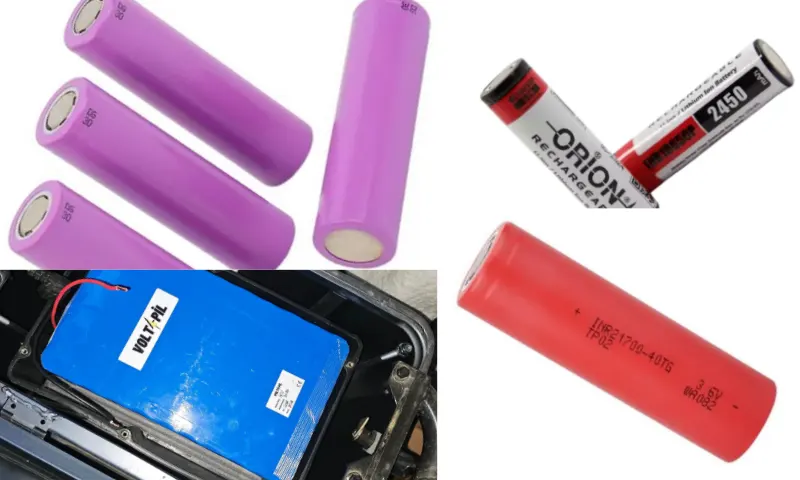
The 18650 battery stands out with its cylindrical structure and lithium-ion technology. This type of battery has a diameter of 18 mm and a length of 65 mm. Compared to other battery types, it has a higher energy density. This means it can store more energy in the same volume. While AA batteries operate at 1.5V, 18650 batteries offer an output of 3.6V or 3.7V. This difference allows devices to operate more powerfully. Battery types such as NiMH and NiCd have shorter lifespans and lower capacities. These older technologies may suffer from the memory effect. For detailed information about 18650 batteries, you can visit the website: https://voltpilbatarya.com/urun-kategori/lityum-piller/lityum-iyon-pil/.
How is an 18650 Battery Protected from Overcharging?
The lifespan of an 18650 battery varies depending on usage conditions and manufacturing quality. On average, a quality 18650 battery has approximately 300 to 500 charge cycles. This means users can efficiently use the same battery for 2 to 3 years. However, there's an important detail here: a charge cycle is the process of the battery being completely discharged and then fully recharged. So, if you discharge it halfway and recharge it, it is not counted as a full cycle. One of the most significant factors affecting battery life is temperature. Extremely hot environments can degrade the battery's chemical structure and reduce its capacity. Due to its lithium-ion structure, the 18650 battery is sensitive to overcharging. Overcharging can disrupt the battery's chemical balance, reduce its capacity, and even pose a safety risk. Therefore, the most effective protection method is to choose batteries with a protection circuit. This circuit prevents the battery from exceeding a certain voltage. Another important point is to use a quality charger. Smart chargers automatically stop supplying power when the charging process is complete, preventing the battery from receiving excess energy.