Antakya Travel Guide
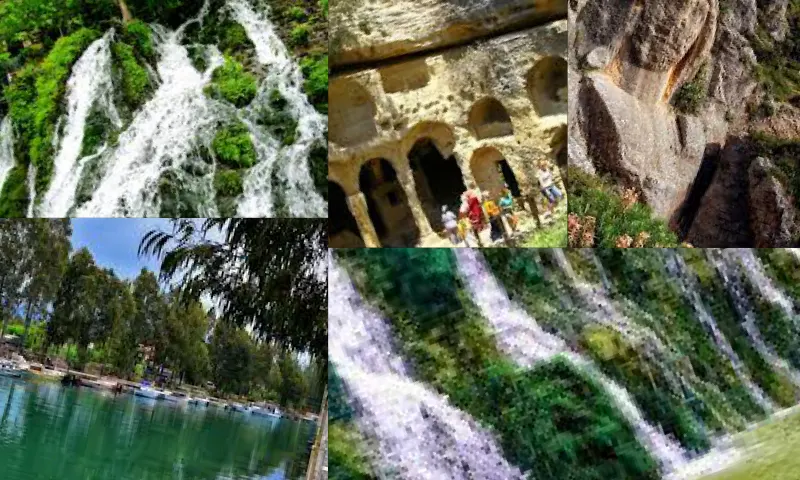
CHURCH CARVED INTO ROCKS
Mount Habib-i Neccar, which encircles the city with its city walls and castle, is the symbol of the city. The mountain, a great location to observe the city, also serves as a natural border. You can visit Habib-i Neccar Mosque, which is the first mosque built in Anatolia. When the city of Antakya was conquered by Abu Ubaydah ibn al-Jarrah, one of Caliph Umar's commanders, in 636, this mosque was built as a symbol of this conquest on the site of the graves of Habib-i Neccar and two of Jesus' apostles.
HARON STATUE WITHOUT A FACE
The Church of St. Peter, formed by a cave with a depth of 13 meters, a width of 9.5 meters, and a height of 7 meters, is definitely worth seeing. This original structure, proposed for the UNESCO World Heritage list, is considered a pilgrimage site by Christians. It is currently a museum and an important place where Catholic Church ceremonies are held every year on June 29 under the supervision of the museum directorate. Haron, located 20 kilometers from the Church of St. Peter, is actually a human portrait carved into the rocks. In the time of 4th Antiochus Epiphanes, considered the founder of Antakya, a great plague began, and to stop it, the people began to carve the face of Haron, known as the Ferryman of Hades, into Mount Stauris. The portrait was intended to be made as a mask overlooking the city, but the plague ended before the carving was completed, so the people left the carving unfinished, and the portrait remained in its current state with an incomplete face. Cave of the Cradle: The Cave of the Cradle, consisting of tomb chambers carved into rocks spread over a vast area of 300 hectares, is located in Çevlik Village, Samandağ. It is one of the important ruins of the ancient city of "Seleukeia Pieria" and was shaped by the local people of that period by carving it into identically sized chambers side by side. It got the name “Cave of the Cradle” due to the two stone tombs with flat roofs located above it.